← The My First... series
For parents and teachers
Teaching kids 9 to 13 how money really works
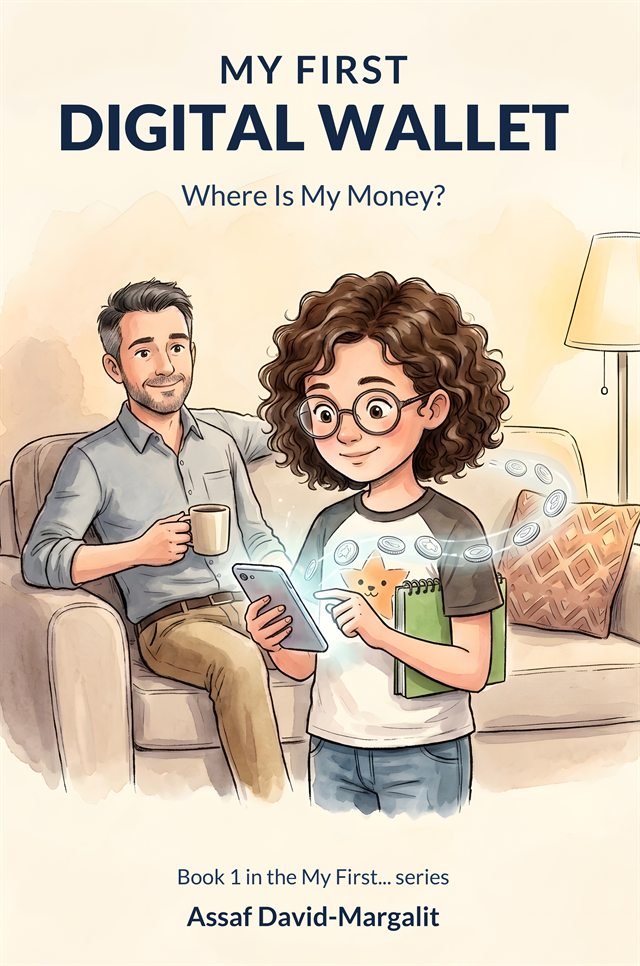
Children get real payment tools long before anyone explains what happens underneath. The My First... series closes that gap with stories: in each book, Emma runs into a real money mystery, works it out clue by clue, and learns how the system behind it actually works.
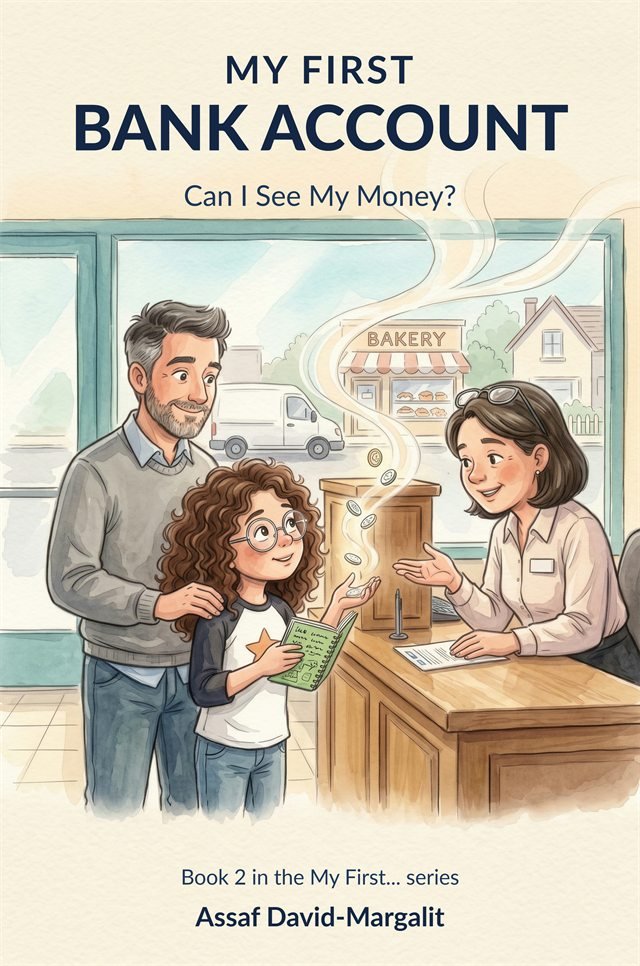
Book 1 teaches a child to look: read every line, and ask “did I mean to do that?” Book 2 teaches them to ask, which is harder, and which most adults haven't mastered either.
New: 12 money lessons for ages 9–13, with a short answer and an activity for each.
Which book for which question
| If your child is… | Start with |
|---|---|
| Getting a first payment app, debit card or digital wallet | Digital Wallet |
| Asking where the money in an app actually is | Digital Wallet |
| Signing up for games, apps or “free trials” | Digital Wallet |
| Getting text messages, or getting a first phone | Digital Wallet |
| Opening a first bank account | Bank Account |
| Saving toward a goal, or getting an allowance | Bank Account |
| Curious about interest, fees and statements | Bank Account |
| Old enough to answer the phone alone | Bank Account |
Using the books at home and in class
End-of-chapter missions
Every chapter ends with a rhyme, Emma's notebook recap, and puzzles and missions. Some are math, some are real-world tasks to do with a grown-up, like auditing a wallet or reading a receipt.
The Final Challenges
Book 1: run a four-minute check of a real transaction history together. Book 2: make a real bank statement add up, count a year of fees, and ask about one line. Children learn most by watching an adult do it calmly.
Free on this site
Available samples of Book 1 and Book 2 (Amazon's Kindle preview), two narrated family games, Spot the Trick and The Sunday Check, answer keys for Book 1 and Book 2, both Final Challenges and both glossaries.
Choices worth knowing about
The mysteries are ordinary on purpose. Emma's frightening charge turns out to be a forgotten purchase, because that is what such charges usually are. A book that teaches children to expect theft teaches anxiety, not competence. The real lesson in Book 1 is a small subscription she had dismissed.
The parent is a co-pilot, not a guard. Emma's spending limit exists to cap a bad day, not to signal distrust. When oversight is framed as a second pair of eyes, children bring the worrying screen to a grown-up instead of hiding it.
Bank lending isn't hidden. Book 2 says plainly that banks lend out deposits, and deals with what follows, including bank runs. A book that says “the bank keeps it safe for you” teaches something that has to be unlearned later.
The scam chapter is about a voice, not a link. Children are taught fairly well not to click links. They're taught much less about a calm caller who knows their name and asks them to keep it from a parent, which is the most reliable warning sign there is.
Questions from parents and teachers
What age is the My First... series for?
Ages 9 to 13, roughly grades 4 to 8. Confident readers can read alone. Younger readers do well reading it with a grown-up, which is what the end-of-chapter puzzles and missions are designed for.
Are the books fiction or nonfiction?
Both. Each book is a mystery story about a girl named Emma. The explanations of how money works inside the story are real and accurate, simplified for children without becoming wrong.
Which book should we start with?
Each book stands alone, so start with the one that matches what your child has now. A payment app, debit card or digital wallet: My First Digital Wallet. A first bank account or a savings goal: My First Bank Account.
Do the books name real banks, apps or brands?
No. All figures are examples, because rules, limits, rates and fees differ between products and countries and change over time. Nothing in the books is financial advice.
Are the books specific to the United States?
Amounts are in dollars, but the books avoid country-specific rules. Where something differs from country to country, such as deposit protection, the book tells readers to find out how it works where they live.
Do the books teach kids about scams?
Yes. Book 1 covers scam text messages (fear, a deadline and one link), why nobody should ever ask for a PIN, and what to do if a phone goes missing. Book 2 covers phone scams, including the “safe account” trick and a caller who asks the child not to tell anyone. The books teach the warning signs without trying to frighten children.
Can the books be used in a classroom?
Yes. Every chapter ends with puzzles and missions, and each book ends with a Final Challenge, a glossary, and a note for parents and teachers. The available samples linked from this site work well as a class read-aloud.
Where can I buy the books?
On Amazon, in Kindle and paperback. My First Digital Wallet (paperback), Kindle. My First Bank Account (paperback), Kindle.